Drone-Based Area Security and Autonomous Perimeter Protection
Drone-based area security elevates perimeter protection, surveillance, and response readiness.
DroneGuardZone is a preparatory platform designed to build long-term authority in this space —
before the market launch of drone sales, deployment, and real-world installations.
Pre-market platform (no active service yet)Drone surveillance complements guardingFocus: industrial sites, logistics, solar parks
Important: this site is informational and preparatory. It does not currently offer drone security services or product sales.
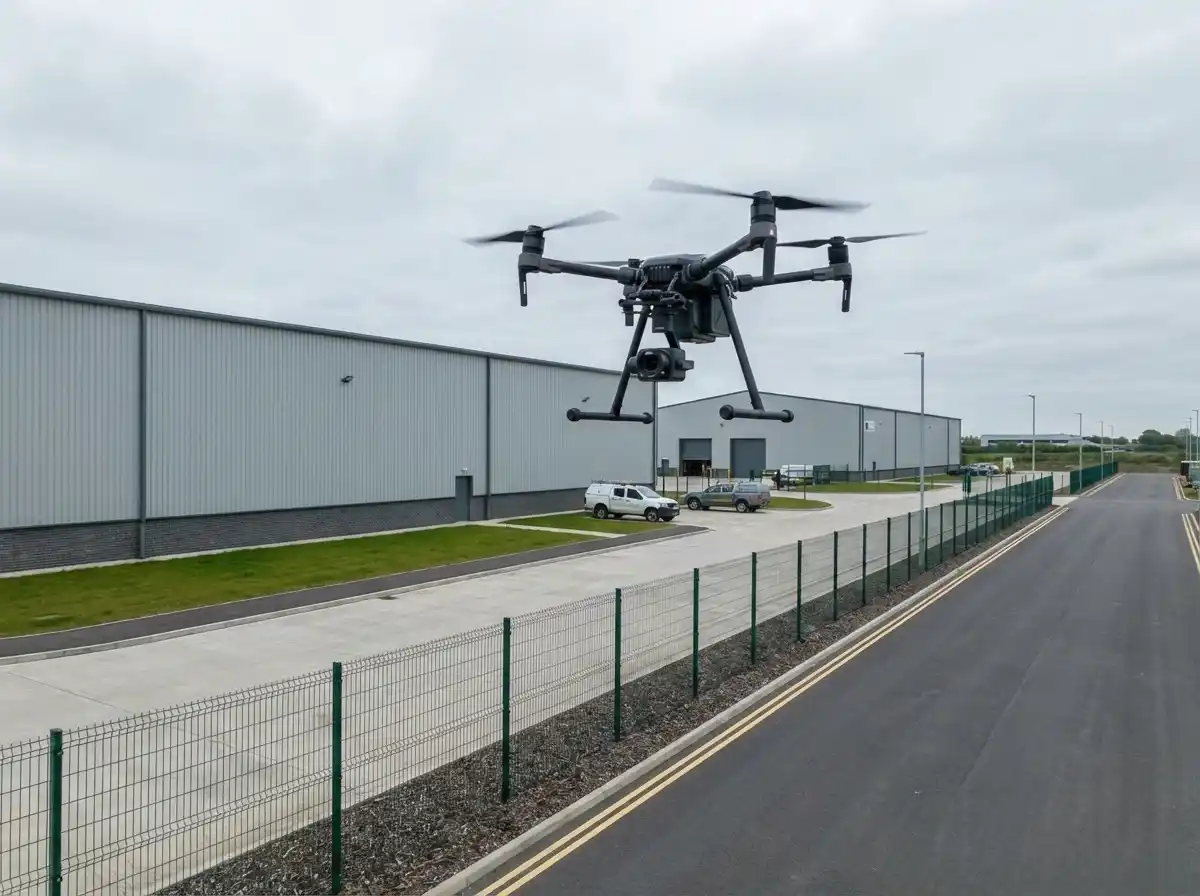
Image 1 (50%)Drone patrol concept
Drone over an industrial site during a perimeter scan.
Aerial coverage supports faster verification and broader visibility across the property.
Perimeter protection
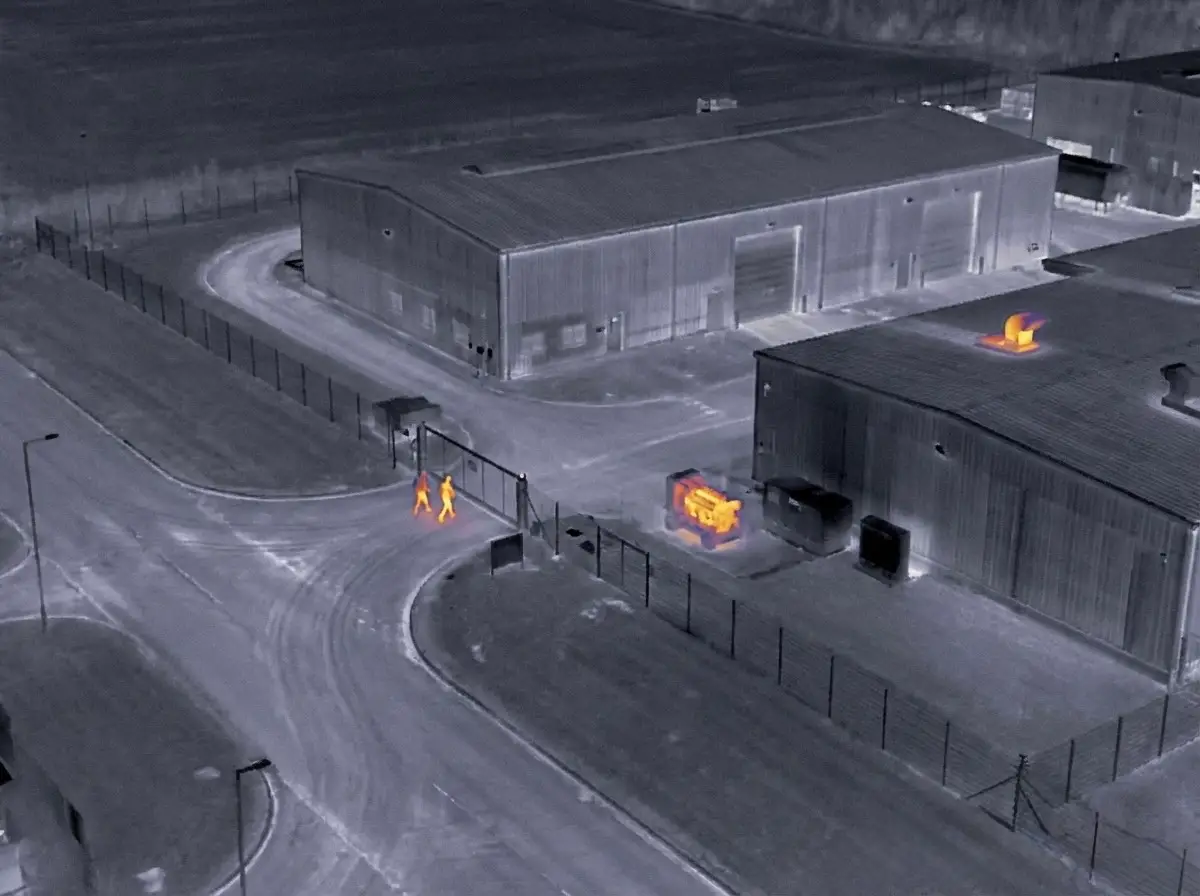
Image 2 (50%)Thermal / night ops
Thermal drone monitoring around a facility at night.
Thermal imaging can detect movement in low visibility and support rapid verification.
Rapid verification
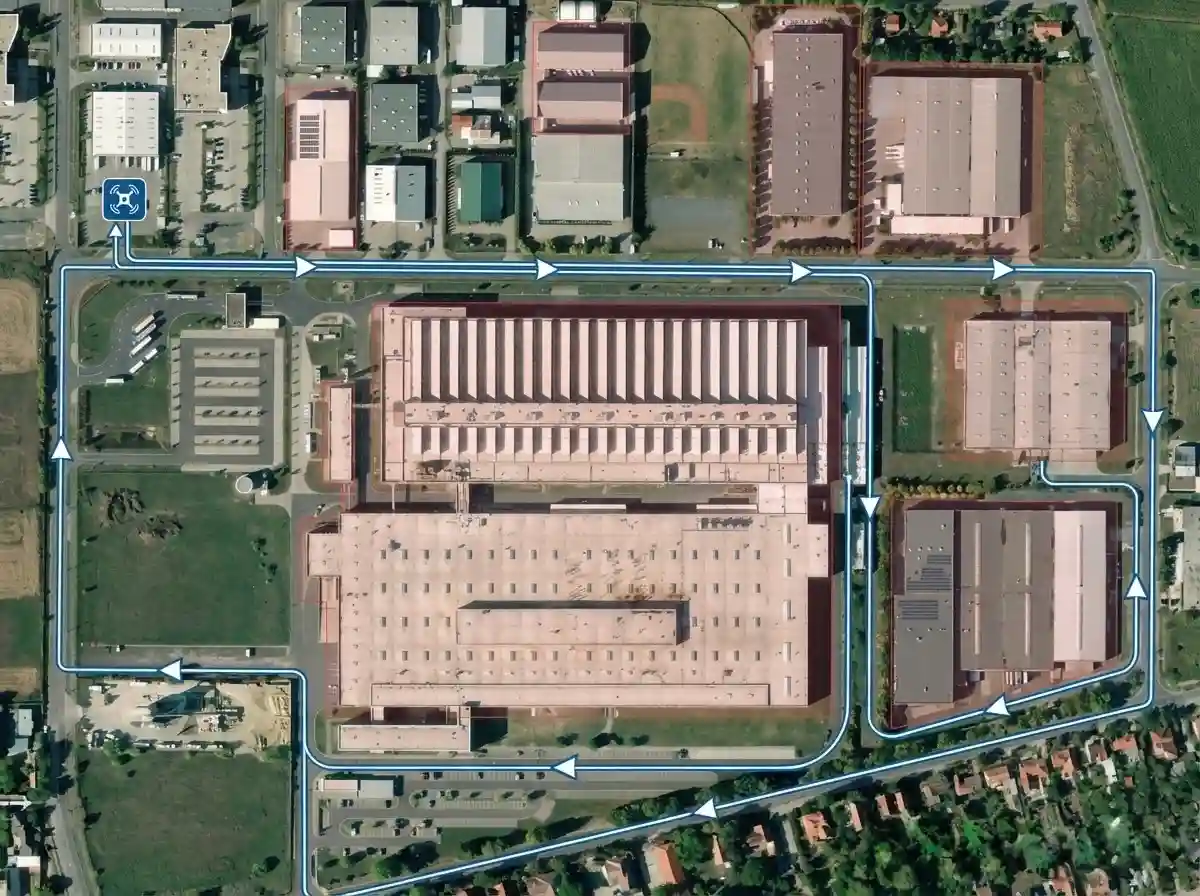
Image 3 (50%)Coverage map
Route planning + zones: coverage is visual, trackable, and easy to optimize later.
Coverage planning
Built for long-term SEO authority
This site is intentionally structured as a knowledge base + roadmap so it provides value
before service launch — and can transition to distribution and deployments later without rewriting everything.
Pre-market now → product distribution + installation later.
How drone-based perimeter protection works
Autonomous drone perimeter protection sits at the intersection of physical and digital security.
It can support faster situational awareness, flexible response, and broader area coverage — especially across
large sites where ground-only methods struggle.
Core concept
Autonomous & semi-autonomous patrols: pre-defined routes with minimal intervention.
Real-time feeds: live video, thermal imagery, and intelligent analysis.
Event-based deployment: drones can verify alerts and reduce uncertainty faster.
Where it fits best
Industrial sites and manufacturing facilities
Logistics hubs and warehouse complexes
Solar parks and energy infrastructure
Large private properties and remote locations
Why traditional area security is no longer sufficient
Ground-only security has real limitations. Drone surveillance is not a replacement — it is an operational
layer that can strengthen coverage and reduce response friction.
Blind spots of fixed cameras: static angles cannot cover everything.
Human patrol limits: fatigue and time constraints reduce consistency.
Large open areas: manpower becomes expensive and slow at scale.
Slow response times: critical minutes are lost in transit.
Coverage gaps: changing site conditions require adaptive visibility.
Pricing (pre-market status)
DroneGuardZone is currently a preparatory platform. Pricing will be published only after legal, technical,
and operational requirements are finalized for real-world deployments.
No active service offerings yetRoadmap-driven market preparation
FAQ
Are you currently selling drones or providing drone security services?
No. DroneGuardZone is currently an informational and preparatory platform. Our focus is on building
technical, operational, and legal foundations and publishing a high-value knowledge base.
What sites benefit most from drone perimeter protection?
Large, open, and complex environments: industrial facilities, logistics hubs, solar parks,
and remote properties where ground-only visibility is limited.
What’s the roadmap?
Knowledge base → technology showcases → operational models → launch after all legal/technical requirements are met.
Contact / updates
Want to follow the project and get notified as the roadmap progresses? Use your preferred contact method below.
Two views of the same topic: USA and the European Union. A clear, practical overview of what “autonomous” really means in regulatory terms.
Quick definitions (so everyone’s on the same page)
These terms show up in FAA guidance, waivers, and most serious commercial UAS programs. Here’s the plain-English meaning.
VLOS (Visual Line of Sight): the pilot (or observer) can continuously see the drone with unaided vision. This is the baseline operating model.
BVLOS (Beyond Visual Line of Sight): the drone is not continuously visible to the pilot/observer. This is typical for large sites and true perimeter coverage — and it usually triggers higher approval requirements.
Remote Pilot in Command (RPIC): the person who is legally responsible for the operation — even if the aircraft is in an automated flight mode.
UAS / sUAS: Unmanned Aircraft System / small UAS. “System” includes the aircraft + control station + software.
Autonomous function: pre-programmed behavior (route, altitude, return-to-home, dock/undock). It can be allowed, but it rarely removes the need for a responsible human.
Semi-autonomous: parts of the mission are automated, but a human remains able to intervene, and accountability stays with the operator.
Fully autonomous: no human involvement during flight. In practice, most real-world regulatory frameworks still require a defined accountable party and safety controls — especially outside tightly controlled environments.
Geofencing: software limits that prevent flight into restricted areas. Helpful for safety, but not a substitute for authorization.
UTM / Drone traffic management: digital coordination of drone flights (especially relevant for BVLOS scaling).
Detect-and-Avoid (DAA): sensing + logic intended to prevent collisions. Often a key topic for BVLOS discussions.
Waiver / Authorization: formal approval to operate outside standard rules (e.g., BVLOS, night, operations over people in certain conditions).
VLOS = within visual sightBVLOS = beyond visual sight (harder)Automation ≠ “no human responsibility”
1) Who regulates drone operations in the USA?
In the United States, civil drone operations are regulated by the FAA (Federal Aviation Administration).
For most commercial missions, the core framework is 14 CFR Part 107 (the Small UAS Rule).
Default model: VLOSBVLOS: typically needs approvalAutonomy: allowed, but accountability remains
2) What “permissions” are typically required?
Remote Pilot Certificate (Part 107): the baseline credential for most commercial operations.
Drone registration: generally required when operating in the applicable category.
Waiver / authorization: needed when you must operate outside standard Part 107 limitations (common examples include BVLOS and certain higher-risk scenarios).
Many “semi-autonomous” workflows (planned routes, automated docking, automated check-ins) are technically feasible —
but the legal model still expects a responsible operator and risk controls.
3) Can you do “fully autonomous” flight in the USA?
Autonomous features (waypoints, return-to-home, geofencing, docking/undocking) are common.
However, the FAA’s practical compliance model is built around human accountability and risk management.
Broad, “no-human-in-the-loop” operations are not the default in everyday commercial use — especially once you move into
BVLOS, people-adjacent environments, or complex airspace.
BVLOS is the real legal breakpoint“Autonomous” ≠ “unattended”
4) Technical compliance themes that matter (USA)
Remote ID: many operations require compliance with Remote ID rules (where applicable).
Safety controls: fail-safe behavior, procedures, logs, and site-specific restrictions.
For perimeter security use cases, the common “hard part” is usually: BVLOS + safety case + accountable supervision.
5) Where the USA is heading (pre-market view)
The direction of travel is toward more routine, scalable missions for industry — including routine BVLOS in controlled contexts.
In practice, “fully autonomous” deployments are most realistic first in managed environments (industrial sites, private property,
defined corridors) with strong safety controls and clear responsibility.
SEO angle (USA): Part 107, BVLOS waiver, Remote ID, and industrial site operations are high-signal topics to build around.
6) Important note (legal nature)
This content is provided for general information and planning purposes and is not legal advice.
Operational eligibility depends on site, airspace, mission profile, and the applicable FAA approvals.
Quick definitions (EU context)
EU drone regulation is strongly risk-based. These terms help you understand where “autonomy” fits in the legal model.
Open / Specific / Certified: the three EU categories. More risk = stricter requirements.
VLOS / BVLOS: visual line of sight vs beyond visual line of sight (BVLOS usually sits in Specific).
Operational authorization: permission to run a defined mission profile (often needed in Specific).
SORA: a common risk assessment methodology used to justify mitigations (people, ground risk, air risk).
Open = low risk, simplerSpecific = industrial/BVLOS territoryAutonomy ≠ no accountability
1) Who regulates drones in the EU?
In the European Union, drone operations follow a unified framework built on EASA rules and implemented by national aviation authorities.
The approach is risk-based: the higher the risk, the more formal the approval requirements.
Open: lower riskSpecific: higher risk / BVLOSCertified: very high risk
2) What does “autonomous” mean legally in the EU?
Autonomous capabilities (route planning, automated modes, docking) are not automatically prohibited.
But the EU regulatory model expects that responsibility and oversight remain traceable to a person or organization.
Semi-autonomous operations are often achievable within the appropriate category.
“Fully autonomous with no oversight” is not the default legal assumption for real-world operations.
3) Where does industrial perimeter security usually fit?
Large industrial sites (logistics, energy, large campuses) typically push you into the Specific category.
That’s where planned routes, semi-autonomous workflows, and potentially BVLOS can be authorized — with a safety case and mitigations.
Specific = defined mission profile + approvals + documented procedures
Risk logic often follows SORA (ground/air risk, mitigations, contingency plans)
Expect requirements around operational boundaries, emergency handling, and accountability
4) BVLOS — why it’s the critical breakpoint
For true perimeter coverage, the “real leap” is often BVLOS.
In the EU, BVLOS is generally not automatic — but it can be authorized within Specific when the safety case is strong.
BVLOS can be approved, but it’s risk-drivenAutonomy does not remove accountability
5) U-space and what changes next in the EU
The EU’s long-term direction is to make complex operations (BVLOS, denser airspace, industrial scaling) more routine — but controlled.
U-space services (drone traffic management) are expected to shape what “scalable autonomy” looks like in practice.
SEO angle (EU): Specific category, BVLOS authorization, SORA, and U-space are the most relevant pillars.
6) Important note (legal nature)
This page is informational and is not legal advice.
Eligibility depends on airspace, site constraints, mission profile, and the national authority’s approval process.